

Ottoman Fryer and Equipment Selection Guide for Fish Frying
Plan the appropriate Ottoman fryer, dedicated oil line, filtration, and display setup according to fish type, coating, and service volume.
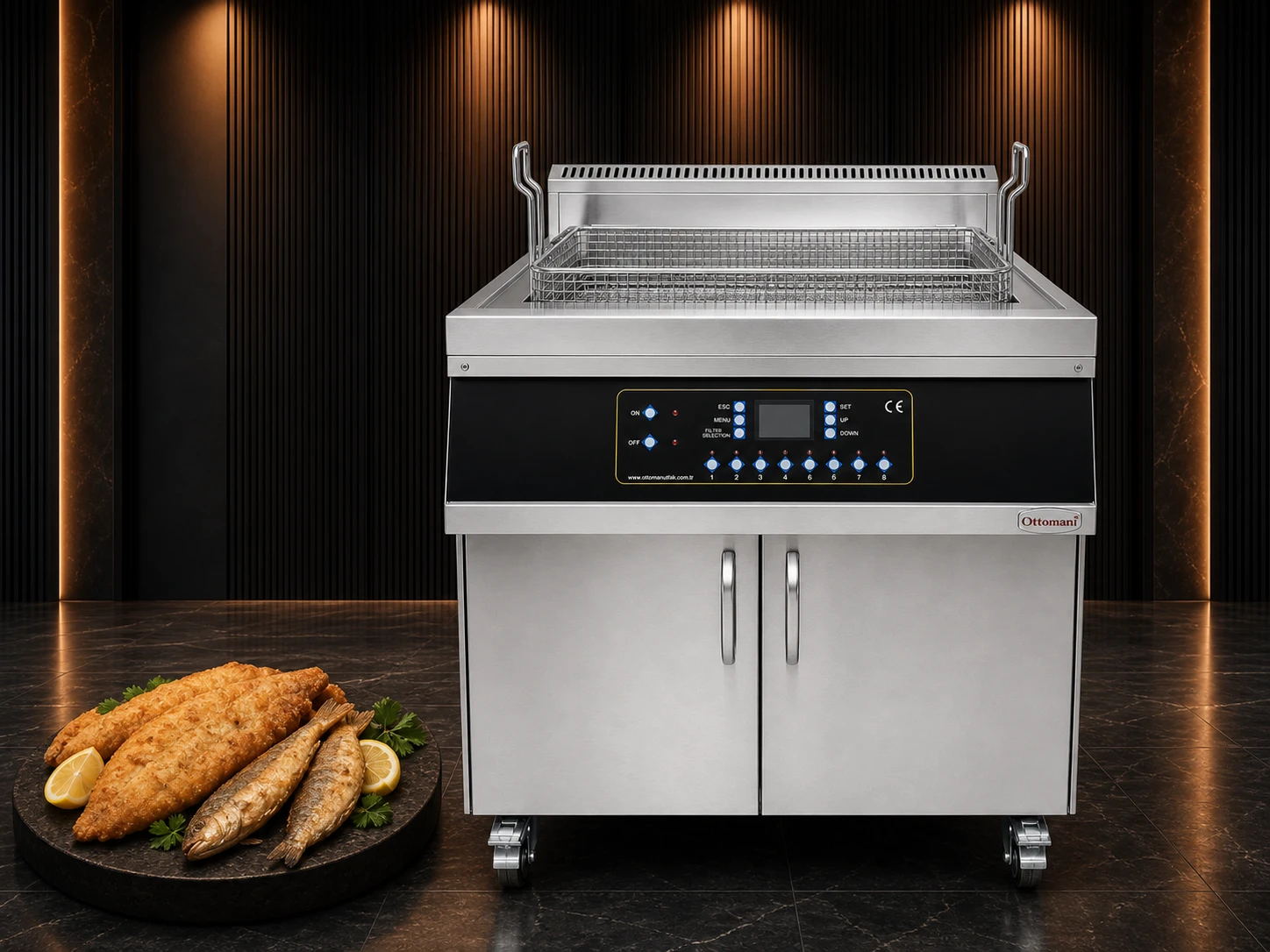
Why is the right fryer critical for frying fish?
Fish fillets, whole fish, calamari, and breaded seafood do not yield the same results using the same basket and vat arrangement. The product’s size, thickness, coating type, portion weight, and peak hour order volume determine the fryer’s vat geometry, basket size, and control system.
Overlapping fish pieces can damage the coating, cause pieces to stick together, and result in uneven cooking. Therefore, an Ottoman Tempura Fryer with a wide surface area that allows easier placement is a strong baseline solution, especially for fillets, whole fish, and delicate coated products.
Which fish products are suitable for the Ottoman Tempura Fryer?
Ottoman Tempura Fryers are designed with shallower oil vats and wider basket areas to accommodate delicate products that are difficult to fry stacked. This design helps arrange fish fillets, portioned whole fish, tempura-coated shrimp, and calamari more evenly across the surface.
The Single-Program Electric Tempura Fryer OTX-MTFE is ideal for operations running consistent and simple recipes. The 8-Program Electric Tempura Fryer OTX-DTFE supports multiple fish or seafood recipes by memorizing and standardizing cooking time and temperature settings between shifts.
For projects requiring an under-counter closed body and a more integrated station, the electric OTX-TFA is recommended; while gas-fired OTX-TFG is suitable for kitchens with appropriate gas infrastructure. The final choice should be made considering the menu and peak capacity, along with the facility’s electricity, natural gas, or LPG supply.
When should the Digital Fast Food Fryer be preferred?
If the menu includes small portioned coated fish pieces, fish and chips, croquettes, potatoes, and various snacks prepared at high speed, Ottoman Digital Fast Food Fryers offer a more flexible production setup. Programmed controls help consistently manage different recipes’ cooking times and temperatures.
However, frying fish and potatoes in the same oil is not suitable for every operation. Due to flavor and odor transfer, coating residue, and allergen management, dedicating a separate vat or fryer exclusively for fish products is a more controlled approach for most professional kitchens.
Create separate oil lines and allergen protocols
- Separate fryers or vats used for fish and shellfish from those for other products.
- Identify fish baskets, straining equipment, and holding containers by color coding or labeling system.
- If the same filtration unit will be used with oils from different products, manage the risk of cross-contact through written procedures.
- Prevent crossover between raw fish preparation areas and cooked product or service pathways.
- Regularly train staff on hot oil safety, allergen management, and cleaning sequences.
Bind oil temperature and product load to the recipe
Excess moisture on fish surfaces causes oil splatter and rapid temperature drops. Products must be properly drained before frying; frozen items should be handled according to manufacturer guidelines; and overloading beyond basket capacity should be avoided.
A single temperature setting is not appropriate for all fish products. Fillet thickness, coating type, product freshness or frozen status, and desired surface outcome must be considered together. Ottoman’s digitally controlled models allow saving approved recipes in programs, reducing staff-related variability.
Filtration preserves product quality in fish frying
Particles separated from flour, breadcrumb, and tempura coatings accumulate in the oil, darkening it and impacting the appearance, aroma, and flavor of subsequent products. Regular oil filtration, vat cleaning, and recorded oil quality checks must be integral to daily operations during busy service.
The built-in filtration system in Ottoman fryers covered in this guide can be used regularly between production runs to remove crumbs from the oil. This internal filtration system is intended for routine use during production breaks. Filtration does not renew degraded oil; correct usage intervals should be followed according to device instructions, and decisions to change the oil must rely not only on its color but also on the establishment’s measurement and food safety protocols.
Fish Display Unit completes sales and service setup
In restaurants where fresh fish is presented visibly to customers, the Ottoman Fish Display Unit supports product presentation and selection before the frying line. Features such as a water drainage pipe, compartment trays, and a 304-grade stainless steel body provide a functional foundation for professional display.
The display unit does not replace the cold chain, product temperature control, or daily cleaning procedures. The kitchen layout must be planned comprehensively from display to cold prep, fryer, and service routes.
Calculate capacity based on peak service hours
- Target portion count for fish and seafood during the busiest hours.
- Raw weight, product size, and coating type per portion.
- Cooking, loading, and unloading times for each recipe.
- Necessary vat separation for fish, shellfish, potatoes, and other products.
- Installed electrical power, natural gas or LPG infrastructure, and hood capacity.
- Filtration frequency, cleaning intervals, and prep time between peak hours.
Set up the Ottoman equipment line according to your menu
For menus with fixed recipes and simpler fish offerings, the Single-Program Electric Tempura Fryer is preferable; for multiple fish and seafood recipes, the 8-Program Electric Tempura Fryer stands out. For high-speed, multi-product services, the Digital Fast Food Fryer with a separate fish vat is an option.
Appropriate Ottoman filtration systems for oil management, the Fish Display Unit for visible fresh product presentation, and stainless steel prep equipment should all be considered within the same project. Thus, fryer selection becomes part of a consistent fish line from receiving products through service, rather than a decision on a single device.
The Ottoman difference
Why choose Ottoman Mutfak?
Ottoman combines equipment selection, capacity planning and after-sales support in one professional-kitchen project.
- Equipment options matched to your menu and peak-hour capacity
- A complete line from preparation and cooking to hot holding and service
- Technical planning focused on reliable operation, energy use and long service life